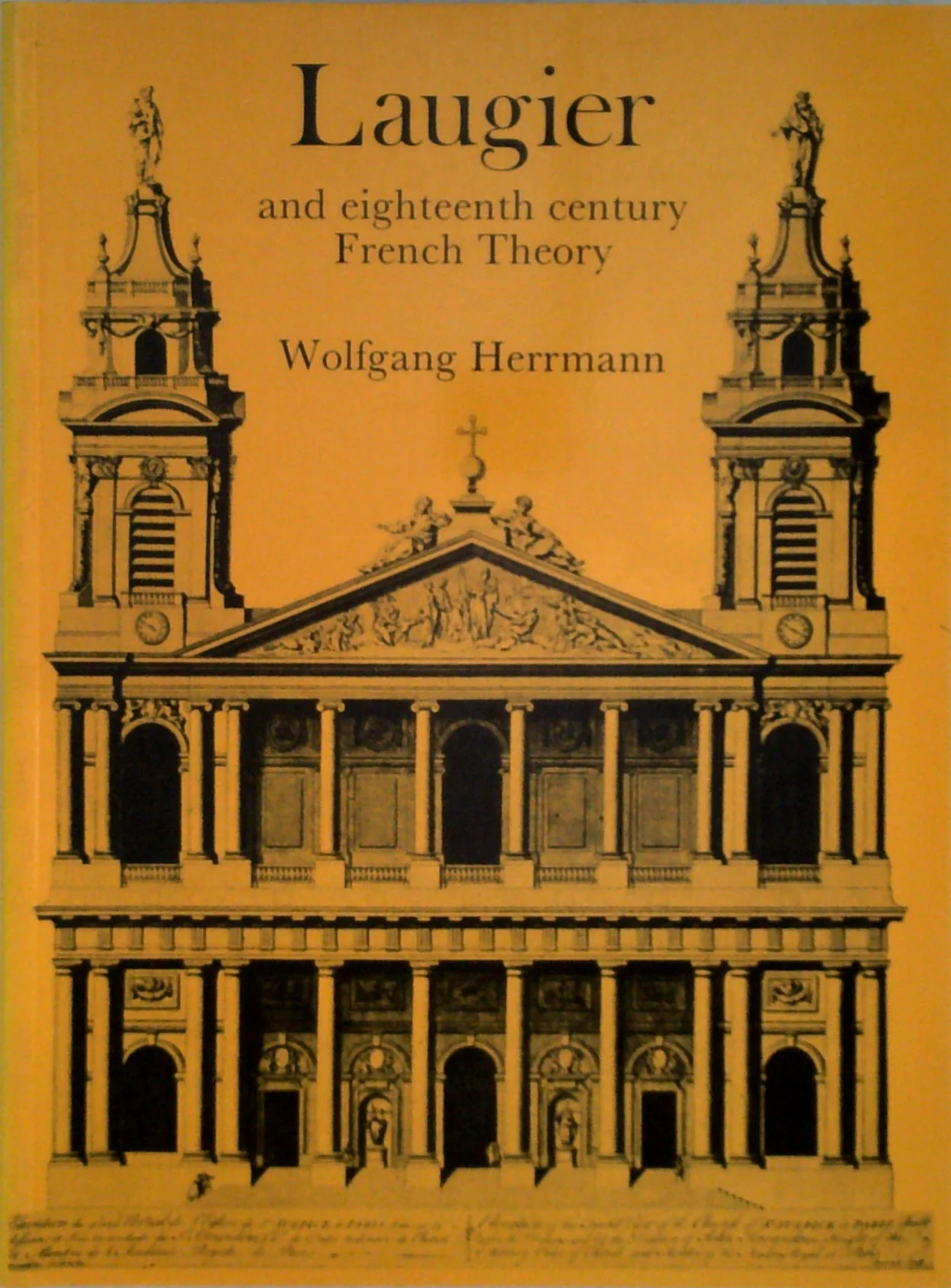
Laugier And Eighteenth Century French Theory
Author: Wolfgang Herrmann
Binding: Paperback
Published: London: A. Zwemmer, 1962
Condition:
Book: Very good
Jacket: No dust jacket - cloth/board in good condition
Pages: Good
Markings: No markings
Condition remarks: sun bleaching to spine; some tanning to inside page edges; in otherwise very good condition
Wolfgang Herrmann's Laugier And Eighteenth Century French Theory presents a rigorous examination of Marc-Antoine Laugier's pivotal role in shaping architectural discourse during the Enlightenment. This scholarly work chronicles Laugier's foundational ideas, particularly his concept of the 'primitive hut,' and their profound impact on the aesthetic and theoretical underpinnings of 18th-century French architecture. Herrmann meticulously details how Laugier's writings challenged prevailing norms and advocated for a return to rational principles in design. The text argues for the enduring relevance of Laugier's contributions, illustrating their significance within the broader intellectual currents of the period. It offers an indispensable resource for scholars of architectural history and Enlightenment studies.
Original: $26.57
-70%$26.57
$7.97Product Information
Product Information
Shipping & Returns
Shipping & Returns
Description
Author: Wolfgang Herrmann
Binding: Paperback
Published: London: A. Zwemmer, 1962
Condition:
Book: Very good
Jacket: No dust jacket - cloth/board in good condition
Pages: Good
Markings: No markings
Condition remarks: sun bleaching to spine; some tanning to inside page edges; in otherwise very good condition
Wolfgang Herrmann's Laugier And Eighteenth Century French Theory presents a rigorous examination of Marc-Antoine Laugier's pivotal role in shaping architectural discourse during the Enlightenment. This scholarly work chronicles Laugier's foundational ideas, particularly his concept of the 'primitive hut,' and their profound impact on the aesthetic and theoretical underpinnings of 18th-century French architecture. Herrmann meticulously details how Laugier's writings challenged prevailing norms and advocated for a return to rational principles in design. The text argues for the enduring relevance of Laugier's contributions, illustrating their significance within the broader intellectual currents of the period. It offers an indispensable resource for scholars of architectural history and Enlightenment studies.