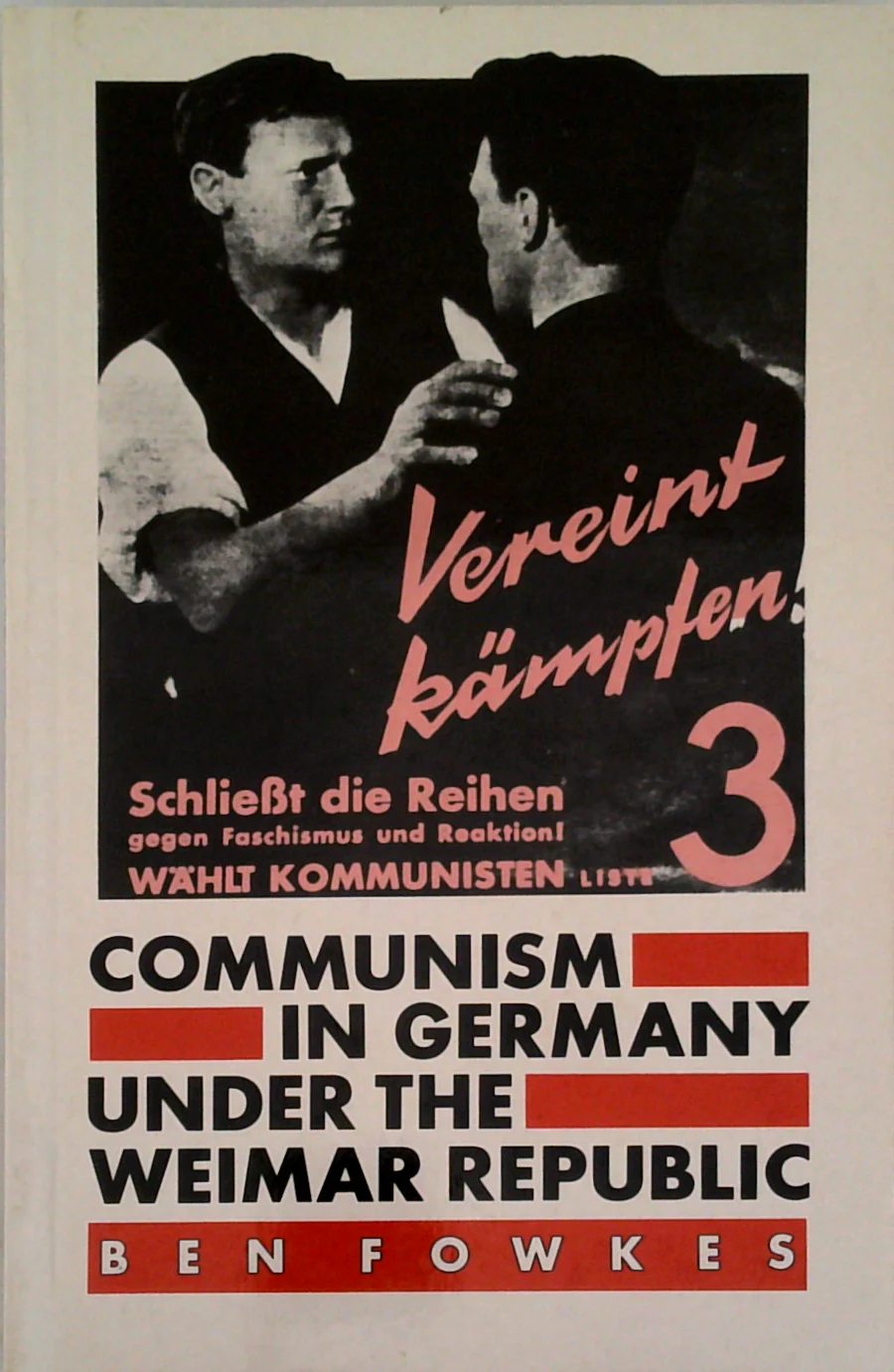
Communism In Germany Under The Weimar Republic
Author: Ben Fowkes
Binding: Paperback
Published: MACMILLAN PRESS LONDON., 1984
Condition:
Book: Very good
Jacket: No dust jacket
Pages: Good
Markings: No markings
Condition remarks: Minor staining to tail of pages. Minor bumping on spine and corner.
This scholarly work chronicles the complex and often tumultuous history of communism in Germany during the Weimar Republic. It meticulously details the ideological underpinnings, organizational structures, and political strategies employed by communist movements in a period of profound social and economic upheaval. The author presents a compelling analysis of the challenges and opportunities faced by these groups, illustrating their impact on German society and the broader European political landscape. This authoritative text uncovers the intricate dynamics between revolutionary aspirations and the realities of parliamentary democracy, offering crucial insights into a pivotal era. It argues for the significant, albeit often contested, role of communist forces in shaping the destiny of interwar Germany.
Original: $70.58
-70%$70.58
$21.17Product Information
Product Information
Shipping & Returns
Shipping & Returns
Description
Author: Ben Fowkes
Binding: Paperback
Published: MACMILLAN PRESS LONDON., 1984
Condition:
Book: Very good
Jacket: No dust jacket
Pages: Good
Markings: No markings
Condition remarks: Minor staining to tail of pages. Minor bumping on spine and corner.
This scholarly work chronicles the complex and often tumultuous history of communism in Germany during the Weimar Republic. It meticulously details the ideological underpinnings, organizational structures, and political strategies employed by communist movements in a period of profound social and economic upheaval. The author presents a compelling analysis of the challenges and opportunities faced by these groups, illustrating their impact on German society and the broader European political landscape. This authoritative text uncovers the intricate dynamics between revolutionary aspirations and the realities of parliamentary democracy, offering crucial insights into a pivotal era. It argues for the significant, albeit often contested, role of communist forces in shaping the destiny of interwar Germany.