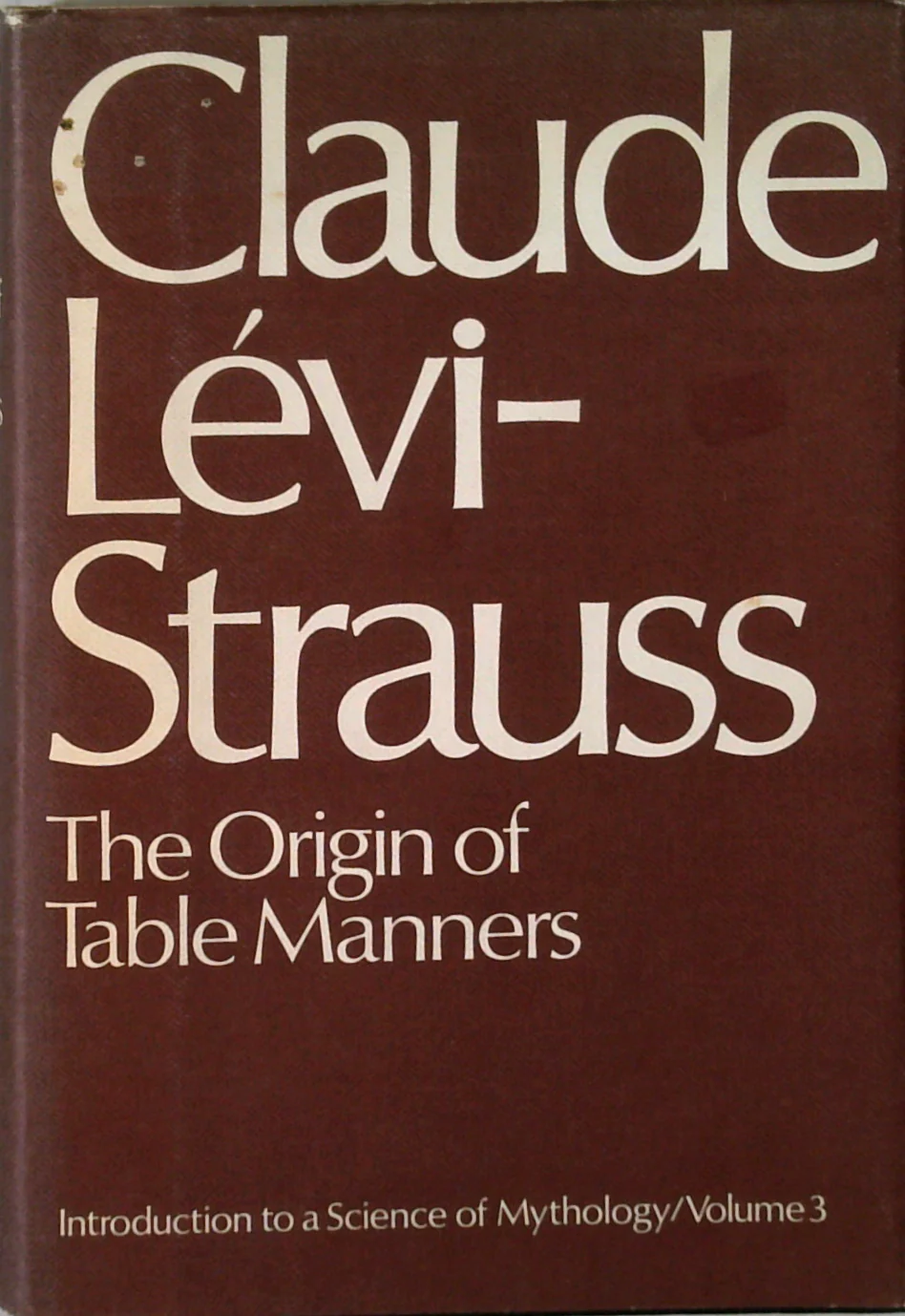
The Origin Of Table Manners: Introduction To A Science Of Mythology, Volume 3
Author: Claude Lévi-Strauss
Binding: Hardback
Publisher: Jonathan Cape., 1978
Condition remarks:
Book: Good
Jacket: Chipped and worn with some minor damage
Pages: Tanning and foxing , price clipped
Markings: No markings
Condition remarks: Top-edge discoloured from tanning, minor chipping and rubs to DJ.
The anthropological masterpiece The Origin Of Table Manners: Introduction To A Science Of Mythology Volume 3 presents a profound analysis of human customs, specifically focusing on the intricate rituals surrounding food consumption. Claude Lévi-Strauss meticulously uncovers how table manners function as a complex language, revealing underlying social hierarchies and cultural values. This seminal work illustrates the deep connections between seemingly mundane daily practices and the grand narratives of mythology. It argues that these customs are not arbitrary but are integral components of a universal human symbolic system. The text offers a compelling perspective on the structuralist approach to understanding culture and society.
Original: $21.17
-70%$21.17
$6.35Product Information
Product Information
Shipping & Returns
Shipping & Returns
Description
Author: Claude Lévi-Strauss
Binding: Hardback
Publisher: Jonathan Cape., 1978
Condition remarks:
Book: Good
Jacket: Chipped and worn with some minor damage
Pages: Tanning and foxing , price clipped
Markings: No markings
Condition remarks: Top-edge discoloured from tanning, minor chipping and rubs to DJ.
The anthropological masterpiece The Origin Of Table Manners: Introduction To A Science Of Mythology Volume 3 presents a profound analysis of human customs, specifically focusing on the intricate rituals surrounding food consumption. Claude Lévi-Strauss meticulously uncovers how table manners function as a complex language, revealing underlying social hierarchies and cultural values. This seminal work illustrates the deep connections between seemingly mundane daily practices and the grand narratives of mythology. It argues that these customs are not arbitrary but are integral components of a universal human symbolic system. The text offers a compelling perspective on the structuralist approach to understanding culture and society.