Railways In Retrospect 4 Railways For The People: The Nationalisation Of Britain's Railways In 1948
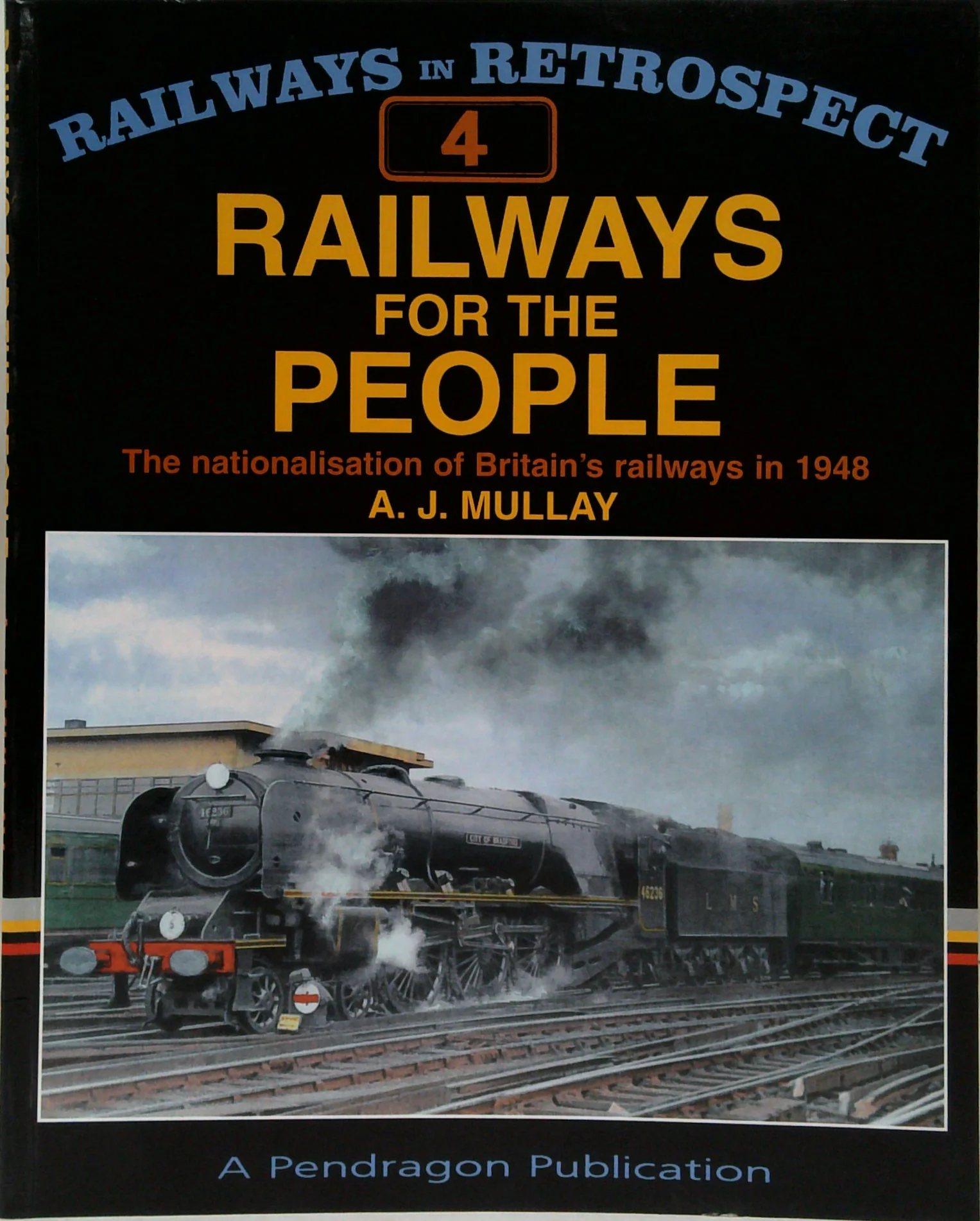
Railways In Retrospect 4 Railways For The People: The Nationalisation Of Britain's Railways In 1948
Author: A. J. Mullay
Binding: Paperback
Published: Pendragon, 2006
Condition:
Book: Good
Jacket: No dust jacket
Pages: Good
Markings: No markings
Condition remarks: Condition as shown in image
This historical account, Railways In Retrospect 4 Railways For The People: The Nationalisation Of Britain's Railways In 1948, chronicles the pivotal moment when Britain's railway system transitioned into public ownership. The narrative details the political motivations, economic considerations, and societal impacts surrounding the 1948 nationalization. Mullay presents a comprehensive analysis of the events leading up to this significant change, illustrating the complexities of post-war industrial policy. The work argues for a deeper understanding of this transformative period in British transport history, offering insights into its lasting legacy. It is an essential read for enthusiasts of railway history and those interested in the evolution of public services.
Original: $5.31
-70%$5.31
$1.59Product Information
Product Information
Shipping & Returns
Shipping & Returns
Description
Author: A. J. Mullay
Binding: Paperback
Published: Pendragon, 2006
Condition:
Book: Good
Jacket: No dust jacket
Pages: Good
Markings: No markings
Condition remarks: Condition as shown in image
This historical account, Railways In Retrospect 4 Railways For The People: The Nationalisation Of Britain's Railways In 1948, chronicles the pivotal moment when Britain's railway system transitioned into public ownership. The narrative details the political motivations, economic considerations, and societal impacts surrounding the 1948 nationalization. Mullay presents a comprehensive analysis of the events leading up to this significant change, illustrating the complexities of post-war industrial policy. The work argues for a deeper understanding of this transformative period in British transport history, offering insights into its lasting legacy. It is an essential read for enthusiasts of railway history and those interested in the evolution of public services.