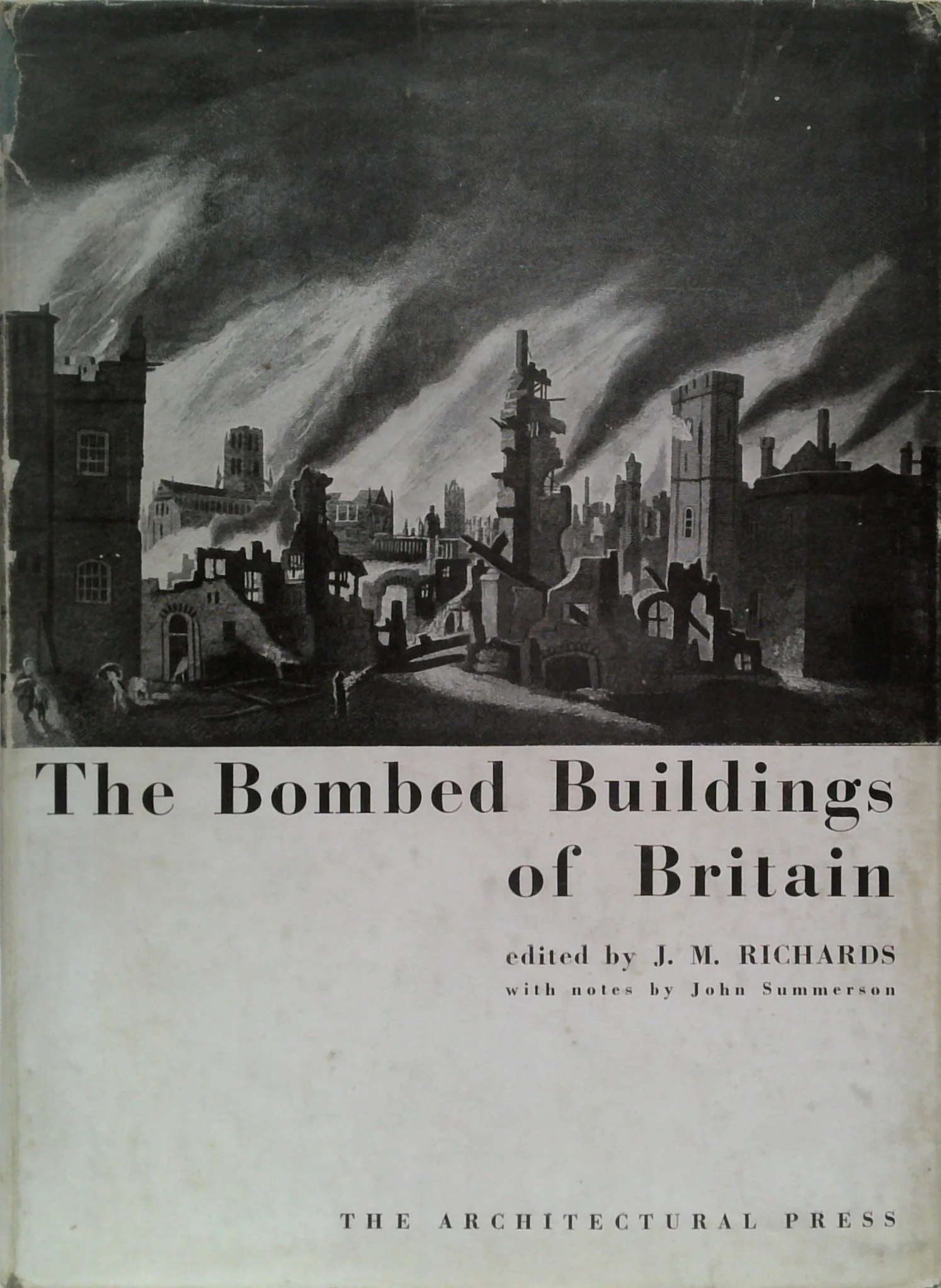
The Bombed Buildings Of Britain: A Record Of Architectural Casualties: 1940-41
Author: J. M. Richards With Notes By John Summerson
Binding: Hardback
Published: The Architectural Press, 1943
Condition:
Book: Fair
Jacket: Chipped and worn with some minor damage
Pages: Yellowed, price clipped
Markings: No markings
The architectural history The Bombed Buildings Of Britain by J. M. Richards chronicles the devastating impact of wartime aerial bombardment on the architectural landscape of the United Kingdom. This seminal work presents a meticulous examination of the destruction wrought upon cities and structures, detailing the immediate aftermath and the long-term implications for urban planning. Richards' authoritative voice uncovers the challenges of reconstruction and the philosophical debates surrounding preservation versus modernization. The book illustrates how these events reshaped national identity through its built environment, offering a poignant reflection on resilience and renewal.
Product Information
Product Information
Shipping & Returns
Shipping & Returns
Description
Author: J. M. Richards With Notes By John Summerson
Binding: Hardback
Published: The Architectural Press, 1943
Condition:
Book: Fair
Jacket: Chipped and worn with some minor damage
Pages: Yellowed, price clipped
Markings: No markings
The architectural history The Bombed Buildings Of Britain by J. M. Richards chronicles the devastating impact of wartime aerial bombardment on the architectural landscape of the United Kingdom. This seminal work presents a meticulous examination of the destruction wrought upon cities and structures, detailing the immediate aftermath and the long-term implications for urban planning. Richards' authoritative voice uncovers the challenges of reconstruction and the philosophical debates surrounding preservation versus modernization. The book illustrates how these events reshaped national identity through its built environment, offering a poignant reflection on resilience and renewal.