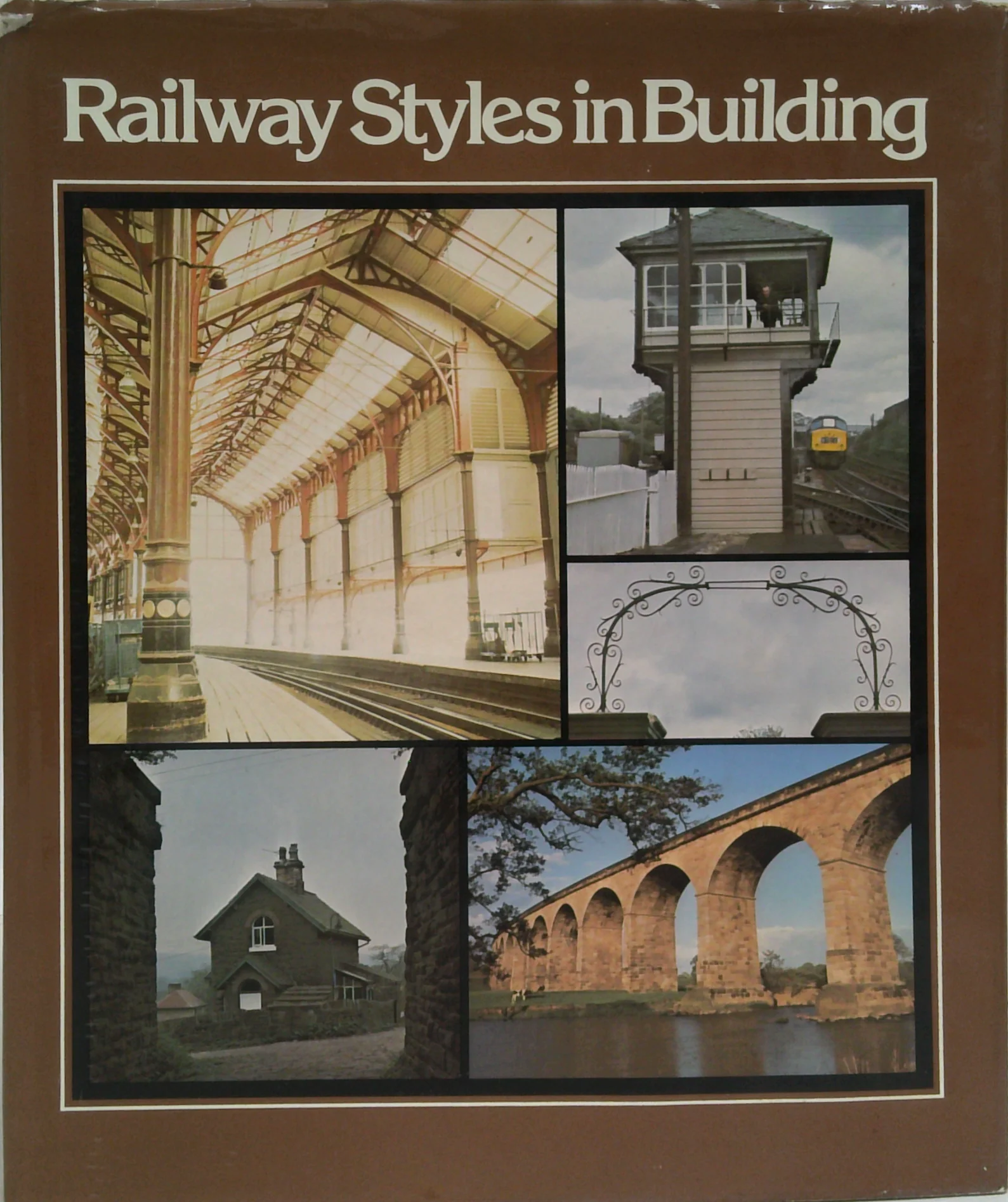
Railway Styles In Building
Author: Michael Bowers
Binding: Hardback
Publisher: Almark Publishing Co. Ltd., 1975
Condition remarks:
Book: Poor
Jacket: Wear and tear
Pages: Some moisture damage
Markings: No markings
This architectural history Railway Styles In Building chronicles the distinctive design evolution of structures associated with railway systems. It presents a comprehensive overview of the various aesthetic movements and engineering considerations that shaped stations, signal boxes, and other essential railway infrastructure across different eras. Michael Bowers details the regional variations and influential architects who contributed to these unique building styles, illustrating how form and function converged in the railway landscape. The work uncovers the cultural and technological impacts that influenced these constructions, from grand Victorian termini to more utilitarian modern designs. This authoritative volume serves as an essential reference for enthusiasts of industrial heritage and architectural studies alike.
Product Information
Product Information
Shipping & Returns
Shipping & Returns
Description
Author: Michael Bowers
Binding: Hardback
Publisher: Almark Publishing Co. Ltd., 1975
Condition remarks:
Book: Poor
Jacket: Wear and tear
Pages: Some moisture damage
Markings: No markings
This architectural history Railway Styles In Building chronicles the distinctive design evolution of structures associated with railway systems. It presents a comprehensive overview of the various aesthetic movements and engineering considerations that shaped stations, signal boxes, and other essential railway infrastructure across different eras. Michael Bowers details the regional variations and influential architects who contributed to these unique building styles, illustrating how form and function converged in the railway landscape. The work uncovers the cultural and technological impacts that influenced these constructions, from grand Victorian termini to more utilitarian modern designs. This authoritative volume serves as an essential reference for enthusiasts of industrial heritage and architectural studies alike.