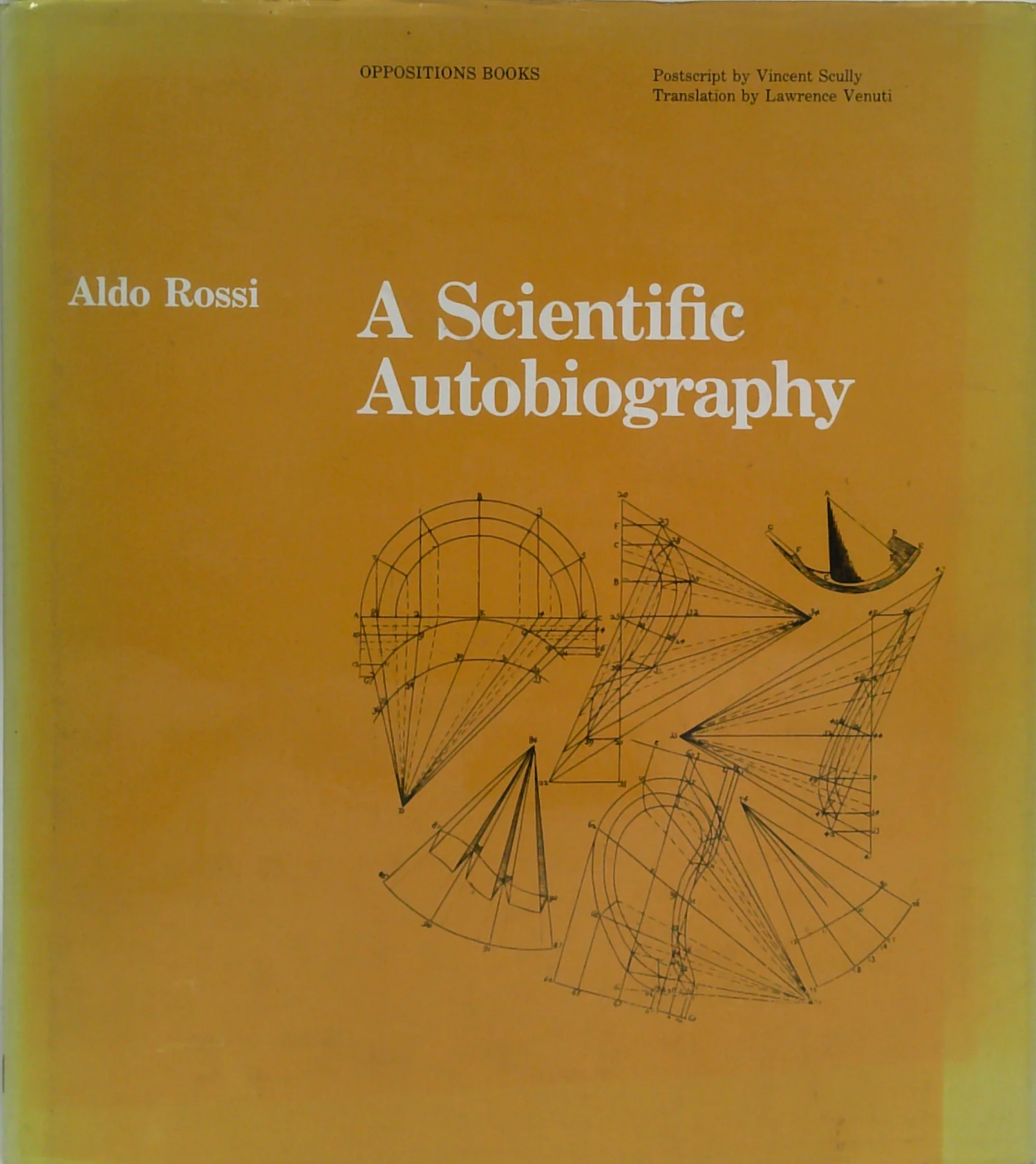
A Scientific Autobiography
Author: Aldo Rossi
Binding: Hardback
Publisher: The MIT Press, 1981
Condition remarks:
Book: Good
Jacket: Wear and tear
Pages: Yellowed
Markings: Previous owner
This compelling work, A Scientific Autobiography, presents a profound architectural treatise, offering a unique perspective on the intersection of memory, urban form, and design theory. Aldo Rossi, a pivotal figure in postmodern architecture, chronicles his intellectual journey and the development of his influential ideas through a series of reflections and theoretical propositions. The text articulates a rigorous methodology for understanding the city as a collective artifact, illustrating how historical structures and personal experiences shape architectural thought. It argues for an architecture rooted in typology and analogy, moving beyond transient styles to embrace enduring forms. This seminal volume is essential reading for anyone interested in the philosophy of architecture and urban studies.
Original: $24.70
-70%$24.70
$7.41Product Information
Product Information
Shipping & Returns
Shipping & Returns
Description
Author: Aldo Rossi
Binding: Hardback
Publisher: The MIT Press, 1981
Condition remarks:
Book: Good
Jacket: Wear and tear
Pages: Yellowed
Markings: Previous owner
This compelling work, A Scientific Autobiography, presents a profound architectural treatise, offering a unique perspective on the intersection of memory, urban form, and design theory. Aldo Rossi, a pivotal figure in postmodern architecture, chronicles his intellectual journey and the development of his influential ideas through a series of reflections and theoretical propositions. The text articulates a rigorous methodology for understanding the city as a collective artifact, illustrating how historical structures and personal experiences shape architectural thought. It argues for an architecture rooted in typology and analogy, moving beyond transient styles to embrace enduring forms. This seminal volume is essential reading for anyone interested in the philosophy of architecture and urban studies.