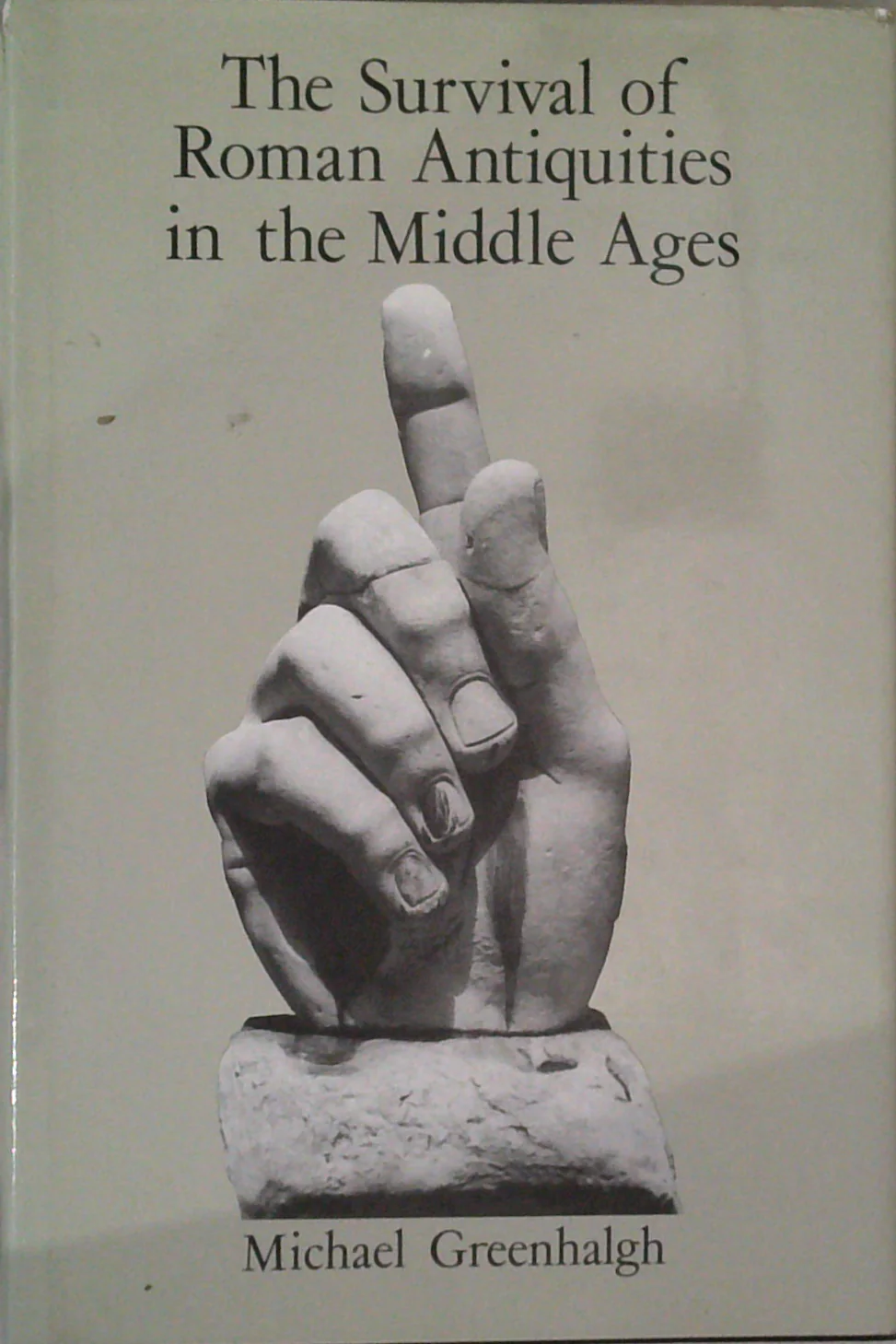
The Survival Of Roman Antiquities In The Middle Ages
Author: Michael Greenhalgh
Binding: Hardback
Published: Duckworth, 1989
Condition:
Book: Good
Jacket: Wear and tear
Pages: Good
Markings: No markings
The scholarly work The Survival Of Roman Antiquities In The Middle Ages presents a meticulous historical account of how the material legacy of the Roman Empire persisted through the medieval era. This comprehensive study details the varied ways ancient Roman structures, sculptures, and cultural practices were perceived, utilized, and preserved—or destroyed—by succeeding generations. Greenhalgh's rigorous research uncovers the complex interplay of reverence, utility, and neglect that shaped the destiny of these invaluable relics. The narrative illustrates how Roman heritage influenced medieval art, architecture, and intellectual thought, offering a profound understanding of cultural continuity and transformation. It argues for a nuanced perspective on the Middle Ages, demonstrating that the period was not merely one of decline but also of adaptation and reinterpretation of classical forms.
Product Information
Product Information
Shipping & Returns
Shipping & Returns
Description
Author: Michael Greenhalgh
Binding: Hardback
Published: Duckworth, 1989
Condition:
Book: Good
Jacket: Wear and tear
Pages: Good
Markings: No markings
The scholarly work The Survival Of Roman Antiquities In The Middle Ages presents a meticulous historical account of how the material legacy of the Roman Empire persisted through the medieval era. This comprehensive study details the varied ways ancient Roman structures, sculptures, and cultural practices were perceived, utilized, and preserved—or destroyed—by succeeding generations. Greenhalgh's rigorous research uncovers the complex interplay of reverence, utility, and neglect that shaped the destiny of these invaluable relics. The narrative illustrates how Roman heritage influenced medieval art, architecture, and intellectual thought, offering a profound understanding of cultural continuity and transformation. It argues for a nuanced perspective on the Middle Ages, demonstrating that the period was not merely one of decline but also of adaptation and reinterpretation of classical forms.