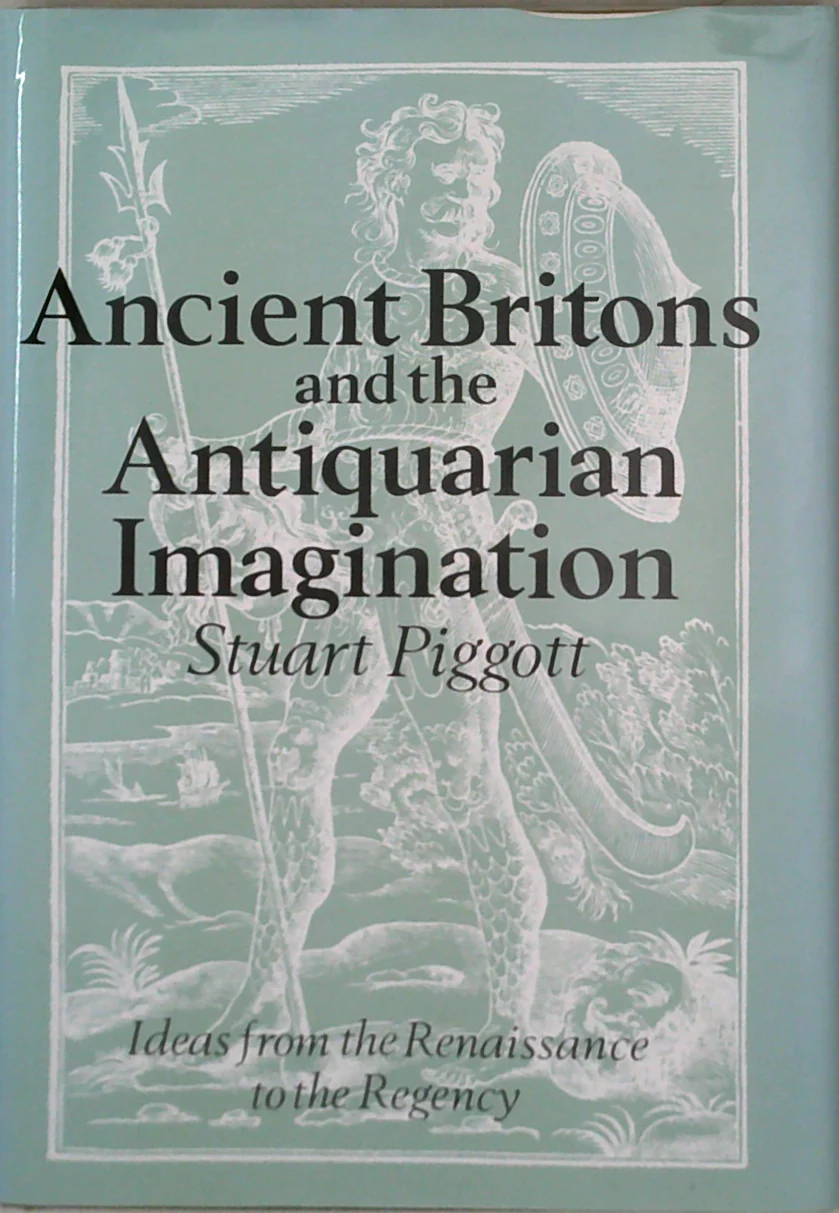
Ancient Britons And The Antiquarian Imagination: Ideas From The Renaissance To The Regency
Author: Stuart Piggott
Binding: Hardback
Published: Thames & Hudson London, 1989
Condition:
Book: Good
Jacket: Worn/faded, no tears
Pages: Tanning and foxing
Markings: No markings
Condition remarks: Sun-faded DJ, foxed edges.
This scholarly work chronicles the evolving perceptions of ancient Britons throughout a pivotal era, from the Renaissance to the Regency. It uncovers how antiquarians, scholars, and artists grappled with archaeological discoveries and historical texts, shaping the understanding of Britain's earliest inhabitants. The narrative presents a detailed intellectual history, illustrating the interplay between emerging scientific thought, national identity, and romantic ideals. Piggott's authoritative voice details the foundational ideas that informed early archaeological inquiry and the imaginative reconstructions of a distant past. This insightful volume argues for the profound impact of these historical interpretations on subsequent academic disciplines and cultural narratives.
Product Information
Product Information
Shipping & Returns
Shipping & Returns
Description
Author: Stuart Piggott
Binding: Hardback
Published: Thames & Hudson London, 1989
Condition:
Book: Good
Jacket: Worn/faded, no tears
Pages: Tanning and foxing
Markings: No markings
Condition remarks: Sun-faded DJ, foxed edges.
This scholarly work chronicles the evolving perceptions of ancient Britons throughout a pivotal era, from the Renaissance to the Regency. It uncovers how antiquarians, scholars, and artists grappled with archaeological discoveries and historical texts, shaping the understanding of Britain's earliest inhabitants. The narrative presents a detailed intellectual history, illustrating the interplay between emerging scientific thought, national identity, and romantic ideals. Piggott's authoritative voice details the foundational ideas that informed early archaeological inquiry and the imaginative reconstructions of a distant past. This insightful volume argues for the profound impact of these historical interpretations on subsequent academic disciplines and cultural narratives.