🎉 Up to 70% Off Selected ItemsShop Sale
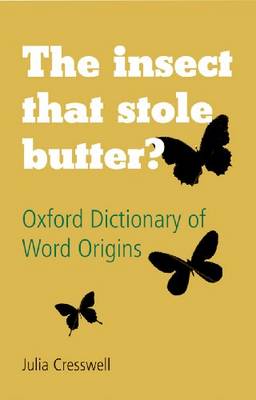
The Insect That Stole Butter?
Combining both accessibility and authority, The Insect That Stole Butter? describes the origins and development of over 3,000 words and phrases in the English language. The book draws on Oxford's unrivalled dictionary research programme and language monitoring, and relates the fascinating stories behind many of our most curious terms and expressions in order to offer the reader a much more explicit account than can be found in a general English dictionary. Organized A-Z, the entries include first known use along with examples that illustrate the many faces of the particular word or phrase, from 'handsome' to 'bachelor' and 'cute' to 'baby', from 'pagan' to 'palaver' and 'toff' to 'torpedo'. Also featured are almost 20 special panels that cover expressions common in English but drawn from other languages, such as 'coffee', 'sugar', and 'candy' from Arabic or 'booze', 'brandy', and 'gin' (Dutch). This absorbing volume is useful for language students and enthusiasts, but also an intriguing read for any person interested in the development of the English language and of language development in general. Includes an extended introduction on the history of the English language.
$2.54
Original: $8.47
-70%The Insect That Stole Butter?—
$8.47
$2.54Product Information
Product Information
Shipping & Returns
Shipping & Returns
Description
Combining both accessibility and authority, The Insect That Stole Butter? describes the origins and development of over 3,000 words and phrases in the English language. The book draws on Oxford's unrivalled dictionary research programme and language monitoring, and relates the fascinating stories behind many of our most curious terms and expressions in order to offer the reader a much more explicit account than can be found in a general English dictionary. Organized A-Z, the entries include first known use along with examples that illustrate the many faces of the particular word or phrase, from 'handsome' to 'bachelor' and 'cute' to 'baby', from 'pagan' to 'palaver' and 'toff' to 'torpedo'. Also featured are almost 20 special panels that cover expressions common in English but drawn from other languages, such as 'coffee', 'sugar', and 'candy' from Arabic or 'booze', 'brandy', and 'gin' (Dutch). This absorbing volume is useful for language students and enthusiasts, but also an intriguing read for any person interested in the development of the English language and of language development in general. Includes an extended introduction on the history of the English language.