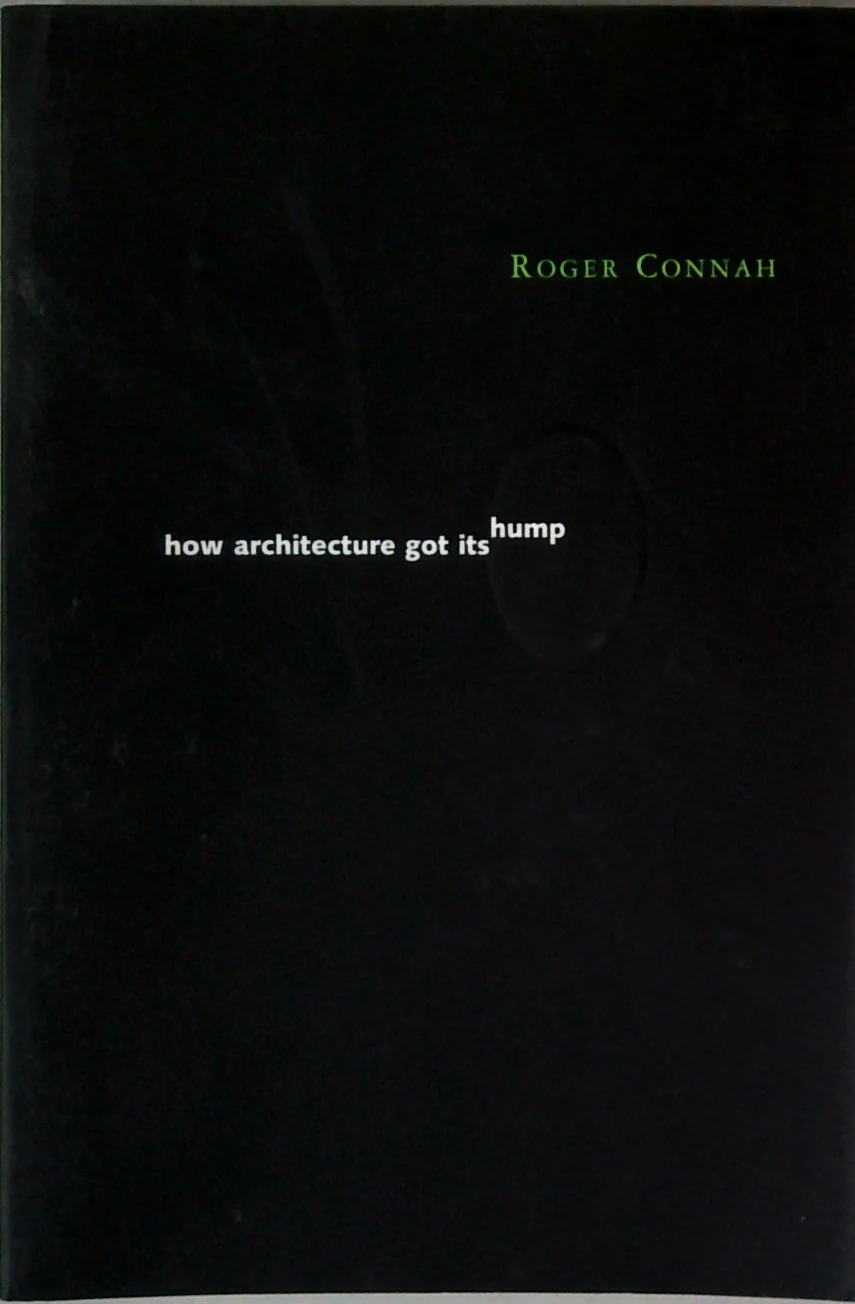
How Architecture Got Its Hump
Author: Roger Connah
Binding: Paperback
Publisher: The MIT Press, 2001
Condition remarks:
Book: Good
Jacket: No dust jacket
Pages: Good
Markings: No markings
Condition remarks: Condition as shown in image
This critical examination chronicles the complex evolution of architectural thought and practice, revealing the formative influences that have shaped its contemporary state. The author, a distinguished voice in architectural theory, argues that the discipline has developed specific, often challenging, characteristics over time, tracing their origins through historical shifts and philosophical underpinnings. This compelling collection of essays meticulously dissects the trajectory of modern architecture, challenging established narratives and presenting a fresh perspective on its current form. Combining rigorous academic analysis with a distinctive, often ironic, tone, the work illustrates a significant contribution to ongoing architectural discourse. It uncovers the intricate forces that have defined the built environment, offering profound insights for both scholars and practitioners.
Original: $10.59
-70%$10.59
$3.18Product Information
Product Information
Shipping & Returns
Shipping & Returns
Description
Author: Roger Connah
Binding: Paperback
Publisher: The MIT Press, 2001
Condition remarks:
Book: Good
Jacket: No dust jacket
Pages: Good
Markings: No markings
Condition remarks: Condition as shown in image
This critical examination chronicles the complex evolution of architectural thought and practice, revealing the formative influences that have shaped its contemporary state. The author, a distinguished voice in architectural theory, argues that the discipline has developed specific, often challenging, characteristics over time, tracing their origins through historical shifts and philosophical underpinnings. This compelling collection of essays meticulously dissects the trajectory of modern architecture, challenging established narratives and presenting a fresh perspective on its current form. Combining rigorous academic analysis with a distinctive, often ironic, tone, the work illustrates a significant contribution to ongoing architectural discourse. It uncovers the intricate forces that have defined the built environment, offering profound insights for both scholars and practitioners.