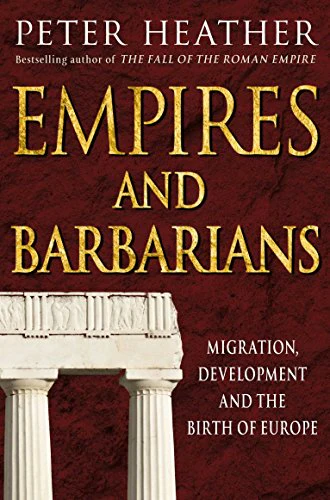
Empires and Barbarians: Migration, Development and the Birth of Europe
NB: This is a secondhand book in very good condition. See our FAQs for more information. Please note that the jacket image is indicative only. A description of our secondhand books is not always available. Please contact us if you have a question about this title.
Author: Peter Heather
Format: Paperback
Number of Pages: 752
At the start of the first millennium AD, southern and western Europe formed part of the Mediterranean-based Roman Empire, the largest state western Eurasia has ever known, and was set firmly on a trajectory towards towns, writing, mosaics, and central heating. Central, northern and eastern Europe was home to subsistence farmers, living in wooden houses with mud floors, whose largest political units weighed in at no more than a few thousand people. By the year 1000, Mediterranean domination of the European landscape had been destroyed. Instead of one huge Empire facing loosely organised subsistence farmers, Europe - from the Atlantic almost to the Urals - was home to an interacting commonwealth of Christian states, many of which are still with us today. This book tells the story of the transformations which changed western Eurasia forever: of the birth of Europe itself.
Original: $10.59
-70%$10.59
$3.18Product Information
Product Information
Shipping & Returns
Shipping & Returns
Description
NB: This is a secondhand book in very good condition. See our FAQs for more information. Please note that the jacket image is indicative only. A description of our secondhand books is not always available. Please contact us if you have a question about this title.
Author: Peter Heather
Format: Paperback
Number of Pages: 752
At the start of the first millennium AD, southern and western Europe formed part of the Mediterranean-based Roman Empire, the largest state western Eurasia has ever known, and was set firmly on a trajectory towards towns, writing, mosaics, and central heating. Central, northern and eastern Europe was home to subsistence farmers, living in wooden houses with mud floors, whose largest political units weighed in at no more than a few thousand people. By the year 1000, Mediterranean domination of the European landscape had been destroyed. Instead of one huge Empire facing loosely organised subsistence farmers, Europe - from the Atlantic almost to the Urals - was home to an interacting commonwealth of Christian states, many of which are still with us today. This book tells the story of the transformations which changed western Eurasia forever: of the birth of Europe itself.