🎉 Up to 70% Off Selected ItemsShop Sale
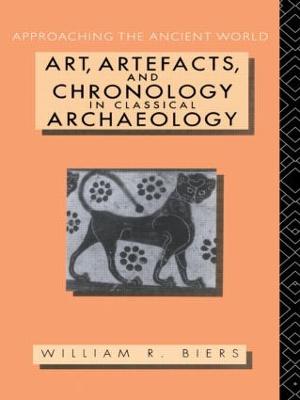
Art, Artefacts and Chronology in Classical Archaeology
The study of art history and archaeology depends substantially on dates which are given to artefacts and works of art. Very few students, however, have an understanding of matters of chronology or of the source material that determines the dates. In this study Professor Biers sets out to explain tihs crucial facet of classical scholarship. Short introductory chapters outline the archaeology and chronology of the ancient Greek and Roman world. The core of the study is two chapters on Relative and Absolute Dating which seek, by use of specific examples, to convey the principles behind how dates are assigned to archaeological and artistic artefacts. Professor Biers presents examples from architecture, sculpture and painting to illustrate how stylistic analysis is used to determine relative dates. Self-dating objects, such as coins, as well as the interpretation of written evidence, are explored to show how specific, absolute dates are deduced. The final chapter examines selected problems in chronology that involve the interipretation of the various kinds of evidence presented in the previous chapters.
The problems of tomb 2 at Vegina, which may contain the remains of Philip II, the father of Alexander the Great are explored, as well as the recent theories on the re-dating of the Archaic and Early Classical periods of Greece.
$1.99
Original: $6.64
-70%Art, Artefacts and Chronology in Classical Archaeology—
$6.64
$1.99Product Information
Product Information
Shipping & Returns
Shipping & Returns
Description
The study of art history and archaeology depends substantially on dates which are given to artefacts and works of art. Very few students, however, have an understanding of matters of chronology or of the source material that determines the dates. In this study Professor Biers sets out to explain tihs crucial facet of classical scholarship. Short introductory chapters outline the archaeology and chronology of the ancient Greek and Roman world. The core of the study is two chapters on Relative and Absolute Dating which seek, by use of specific examples, to convey the principles behind how dates are assigned to archaeological and artistic artefacts. Professor Biers presents examples from architecture, sculpture and painting to illustrate how stylistic analysis is used to determine relative dates. Self-dating objects, such as coins, as well as the interpretation of written evidence, are explored to show how specific, absolute dates are deduced. The final chapter examines selected problems in chronology that involve the interipretation of the various kinds of evidence presented in the previous chapters.
The problems of tomb 2 at Vegina, which may contain the remains of Philip II, the father of Alexander the Great are explored, as well as the recent theories on the re-dating of the Archaic and Early Classical periods of Greece.