🎉 Up to 70% Off Selected ItemsShop Sale
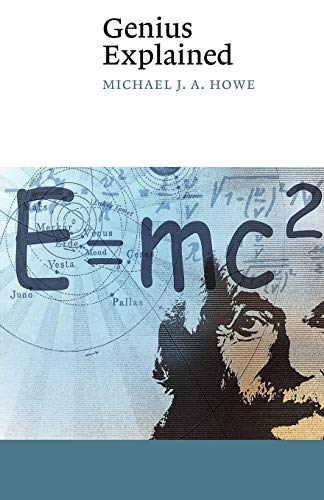
Genius Explained
NB: This is a secondhand book in very good condition. See our FAQs for more information. Please note that the jacket image is indicative only. A description of our secondhand books is not always available. Please contact us if you have a question about this title.
Author: Michael J. A. Howe (University of Exeter)
Format: Paperback
Number of Pages: 236
In Genius Explained Michael J. A. Howe addresses the commonly held belief that genius is born not made. Controversially he suggests that genius is not a mysterious and mystical gift but the product of a combination of environment, personality and sheer hard work. The exceptional talents of those we call geniuses are the result of a unique set of circumstances and opportunities, but in every case they are pursued and exploited with a characteristic drive, determination and focus which the rest of us rarely show. Michael J. A. Howe develops these ideas through a series of case studies focusing on famous figures such as Charles Darwin, George Eliot, George Stevenson, the Bronte sisters, Michael Faraday and Albert Einstein in this fascinating and accessible book which will be of interest to academics, students and the interested lay reader.
Author: Michael J. A. Howe (University of Exeter)
Format: Paperback
Number of Pages: 236
In Genius Explained Michael J. A. Howe addresses the commonly held belief that genius is born not made. Controversially he suggests that genius is not a mysterious and mystical gift but the product of a combination of environment, personality and sheer hard work. The exceptional talents of those we call geniuses are the result of a unique set of circumstances and opportunities, but in every case they are pursued and exploited with a characteristic drive, determination and focus which the rest of us rarely show. Michael J. A. Howe develops these ideas through a series of case studies focusing on famous figures such as Charles Darwin, George Eliot, George Stevenson, the Bronte sisters, Michael Faraday and Albert Einstein in this fascinating and accessible book which will be of interest to academics, students and the interested lay reader.
$2.12
Original: $7.06
-70%Genius Explained—
$7.06
$2.12Product Information
Product Information
Shipping & Returns
Shipping & Returns
Description
NB: This is a secondhand book in very good condition. See our FAQs for more information. Please note that the jacket image is indicative only. A description of our secondhand books is not always available. Please contact us if you have a question about this title.
Author: Michael J. A. Howe (University of Exeter)
Format: Paperback
Number of Pages: 236
In Genius Explained Michael J. A. Howe addresses the commonly held belief that genius is born not made. Controversially he suggests that genius is not a mysterious and mystical gift but the product of a combination of environment, personality and sheer hard work. The exceptional talents of those we call geniuses are the result of a unique set of circumstances and opportunities, but in every case they are pursued and exploited with a characteristic drive, determination and focus which the rest of us rarely show. Michael J. A. Howe develops these ideas through a series of case studies focusing on famous figures such as Charles Darwin, George Eliot, George Stevenson, the Bronte sisters, Michael Faraday and Albert Einstein in this fascinating and accessible book which will be of interest to academics, students and the interested lay reader.
Author: Michael J. A. Howe (University of Exeter)
Format: Paperback
Number of Pages: 236
In Genius Explained Michael J. A. Howe addresses the commonly held belief that genius is born not made. Controversially he suggests that genius is not a mysterious and mystical gift but the product of a combination of environment, personality and sheer hard work. The exceptional talents of those we call geniuses are the result of a unique set of circumstances and opportunities, but in every case they are pursued and exploited with a characteristic drive, determination and focus which the rest of us rarely show. Michael J. A. Howe develops these ideas through a series of case studies focusing on famous figures such as Charles Darwin, George Eliot, George Stevenson, the Bronte sisters, Michael Faraday and Albert Einstein in this fascinating and accessible book which will be of interest to academics, students and the interested lay reader.