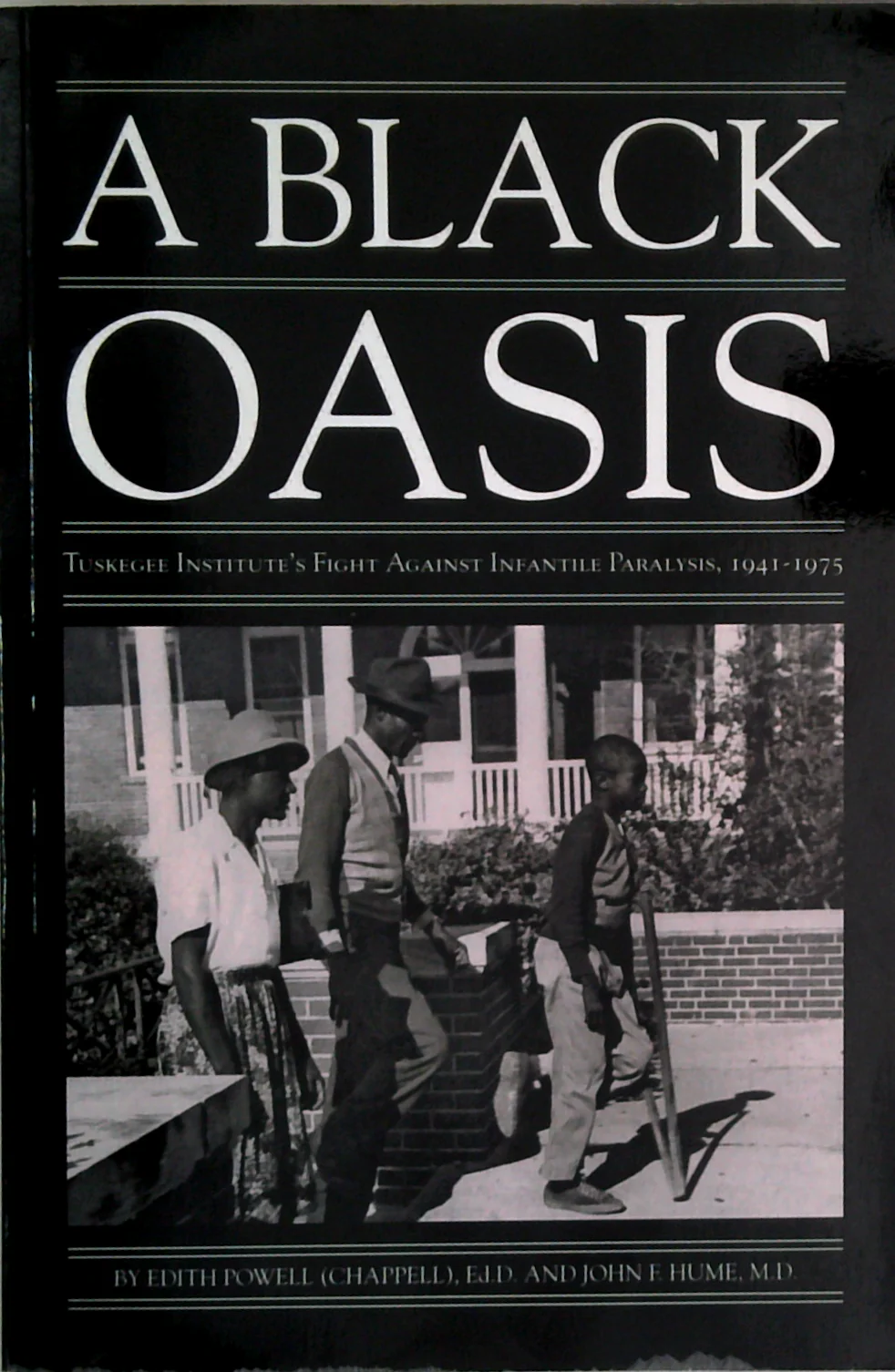
A Black Oasis: Tuskegee Institute's Fight Against Infantile Paralysis
Author: Edith Powell (Chappell), Edd, Mt(Ascp)Sbb; John F. Hume, M.D.
Binding: Paperback
Publisher: Birth Defects Foundation , 2008
Condition remarks:
Book: Good
Jacket: No dust jacket
Pages: Good
Markings: No markings
Condition remarks: Condition as shown in image
A compelling work of historical non-fiction, A Black Oasis: Tuskegee Institute's Fight Against Infantile Paralysis chronicles the extraordinary efforts of the Tuskegee Institute in combating polio. This insightful account uncovers the challenges and triumphs faced by the institution as it established a vital treatment center for infantile paralysis, primarily serving the African American community during a period of profound racial segregation. The narrative presents the dedication of medical professionals and the resilience of patients, illustrating how Tuskegee became a beacon of hope and advanced medical care. It argues for the significant, often overlooked, contributions of Black institutions to public health initiatives, providing a powerful testament to their enduring legacy.
Original: $5.31
-70%$5.31
$1.59Product Information
Product Information
Shipping & Returns
Shipping & Returns
Description
Author: Edith Powell (Chappell), Edd, Mt(Ascp)Sbb; John F. Hume, M.D.
Binding: Paperback
Publisher: Birth Defects Foundation , 2008
Condition remarks:
Book: Good
Jacket: No dust jacket
Pages: Good
Markings: No markings
Condition remarks: Condition as shown in image
A compelling work of historical non-fiction, A Black Oasis: Tuskegee Institute's Fight Against Infantile Paralysis chronicles the extraordinary efforts of the Tuskegee Institute in combating polio. This insightful account uncovers the challenges and triumphs faced by the institution as it established a vital treatment center for infantile paralysis, primarily serving the African American community during a period of profound racial segregation. The narrative presents the dedication of medical professionals and the resilience of patients, illustrating how Tuskegee became a beacon of hope and advanced medical care. It argues for the significant, often overlooked, contributions of Black institutions to public health initiatives, providing a powerful testament to their enduring legacy.