🎉 Up to 70% Off Selected ItemsShop Sale
HomeStore
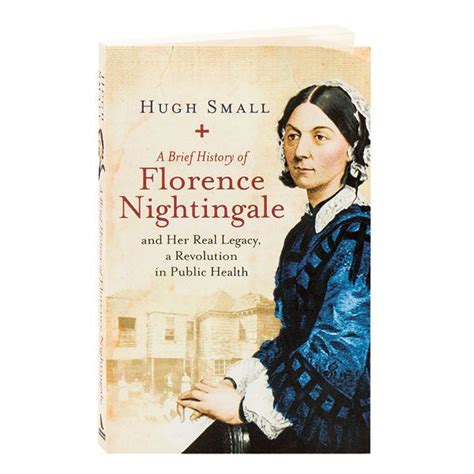
A Brief History of Florence Nightingale: and Her Real Legacy, a Revolution in Public Health
A Brief History of Florence Nightingale: and Her Real Legacy, a Revolution in Public Health
Author: Hugh Small
Format: Paperback / softback
Number of Pages: 256
Praise for Small's earlier work on Nightingale: 'Hugh Small, in a masterly piece of historical detective work, convincingly demonstrates what all previous historians and biographers have missed . . . This is a compelling psychological portrait of a very eminent (and complex) Victorian.' James Le Fanu, Daily Telegraph Florence Nightingale (1820-1910) is best known as a reformer of hospital nursing during and after the Crimean War, but many feel that her nursing reputation has been overstated. A BRIEF HISTORY OF FLORENCE NIGHTINGALE tells the story of the sanitary disaster in her wartime hospital and why the government covered it up against her wishes. After the war she worked to put the lessons of the tragedy to good use to reduce the very high mortality from epidemic disease in the civilian population at home. She did this by persuading Parliament in 1872 to pass laws which required landlords to improve sanitation in working-class homes, and to give local authorities rather than central government the power to enforce the laws. Life expectancy increased dramatically as a result, and it was this peacetime civilian public health reform rather than her wartime hospital nursing record that established Nightingale's reputation in her lifetime. After her death the wartime image became popular again as a means of recruiting hospital nurses and her other achievements were almost forgotten. Today, with nursing's new emphasis on 'primary' care and prevention outside hospitals, Nightingale's focus on public health achievements makes her an increasingly relevant figure.
Format: Paperback / softback
Number of Pages: 256
Praise for Small's earlier work on Nightingale: 'Hugh Small, in a masterly piece of historical detective work, convincingly demonstrates what all previous historians and biographers have missed . . . This is a compelling psychological portrait of a very eminent (and complex) Victorian.' James Le Fanu, Daily Telegraph Florence Nightingale (1820-1910) is best known as a reformer of hospital nursing during and after the Crimean War, but many feel that her nursing reputation has been overstated. A BRIEF HISTORY OF FLORENCE NIGHTINGALE tells the story of the sanitary disaster in her wartime hospital and why the government covered it up against her wishes. After the war she worked to put the lessons of the tragedy to good use to reduce the very high mortality from epidemic disease in the civilian population at home. She did this by persuading Parliament in 1872 to pass laws which required landlords to improve sanitation in working-class homes, and to give local authorities rather than central government the power to enforce the laws. Life expectancy increased dramatically as a result, and it was this peacetime civilian public health reform rather than her wartime hospital nursing record that established Nightingale's reputation in her lifetime. After her death the wartime image became popular again as a means of recruiting hospital nurses and her other achievements were almost forgotten. Today, with nursing's new emphasis on 'primary' care and prevention outside hospitals, Nightingale's focus on public health achievements makes her an increasingly relevant figure.
$2.54
Original: $8.47
-70%A Brief History of Florence Nightingale: and Her Real Legacy, a Revolution in Public Health—
$8.47
$2.54Product Information
Product Information
Shipping & Returns
Shipping & Returns
Description
Author: Hugh Small
Format: Paperback / softback
Number of Pages: 256
Praise for Small's earlier work on Nightingale: 'Hugh Small, in a masterly piece of historical detective work, convincingly demonstrates what all previous historians and biographers have missed . . . This is a compelling psychological portrait of a very eminent (and complex) Victorian.' James Le Fanu, Daily Telegraph Florence Nightingale (1820-1910) is best known as a reformer of hospital nursing during and after the Crimean War, but many feel that her nursing reputation has been overstated. A BRIEF HISTORY OF FLORENCE NIGHTINGALE tells the story of the sanitary disaster in her wartime hospital and why the government covered it up against her wishes. After the war she worked to put the lessons of the tragedy to good use to reduce the very high mortality from epidemic disease in the civilian population at home. She did this by persuading Parliament in 1872 to pass laws which required landlords to improve sanitation in working-class homes, and to give local authorities rather than central government the power to enforce the laws. Life expectancy increased dramatically as a result, and it was this peacetime civilian public health reform rather than her wartime hospital nursing record that established Nightingale's reputation in her lifetime. After her death the wartime image became popular again as a means of recruiting hospital nurses and her other achievements were almost forgotten. Today, with nursing's new emphasis on 'primary' care and prevention outside hospitals, Nightingale's focus on public health achievements makes her an increasingly relevant figure.
Format: Paperback / softback
Number of Pages: 256
Praise for Small's earlier work on Nightingale: 'Hugh Small, in a masterly piece of historical detective work, convincingly demonstrates what all previous historians and biographers have missed . . . This is a compelling psychological portrait of a very eminent (and complex) Victorian.' James Le Fanu, Daily Telegraph Florence Nightingale (1820-1910) is best known as a reformer of hospital nursing during and after the Crimean War, but many feel that her nursing reputation has been overstated. A BRIEF HISTORY OF FLORENCE NIGHTINGALE tells the story of the sanitary disaster in her wartime hospital and why the government covered it up against her wishes. After the war she worked to put the lessons of the tragedy to good use to reduce the very high mortality from epidemic disease in the civilian population at home. She did this by persuading Parliament in 1872 to pass laws which required landlords to improve sanitation in working-class homes, and to give local authorities rather than central government the power to enforce the laws. Life expectancy increased dramatically as a result, and it was this peacetime civilian public health reform rather than her wartime hospital nursing record that established Nightingale's reputation in her lifetime. After her death the wartime image became popular again as a means of recruiting hospital nurses and her other achievements were almost forgotten. Today, with nursing's new emphasis on 'primary' care and prevention outside hospitals, Nightingale's focus on public health achievements makes her an increasingly relevant figure.