Secondhand Literary Classics Bargain Book Box SP2351
Secondhand Literary Classics Bargain Book Box
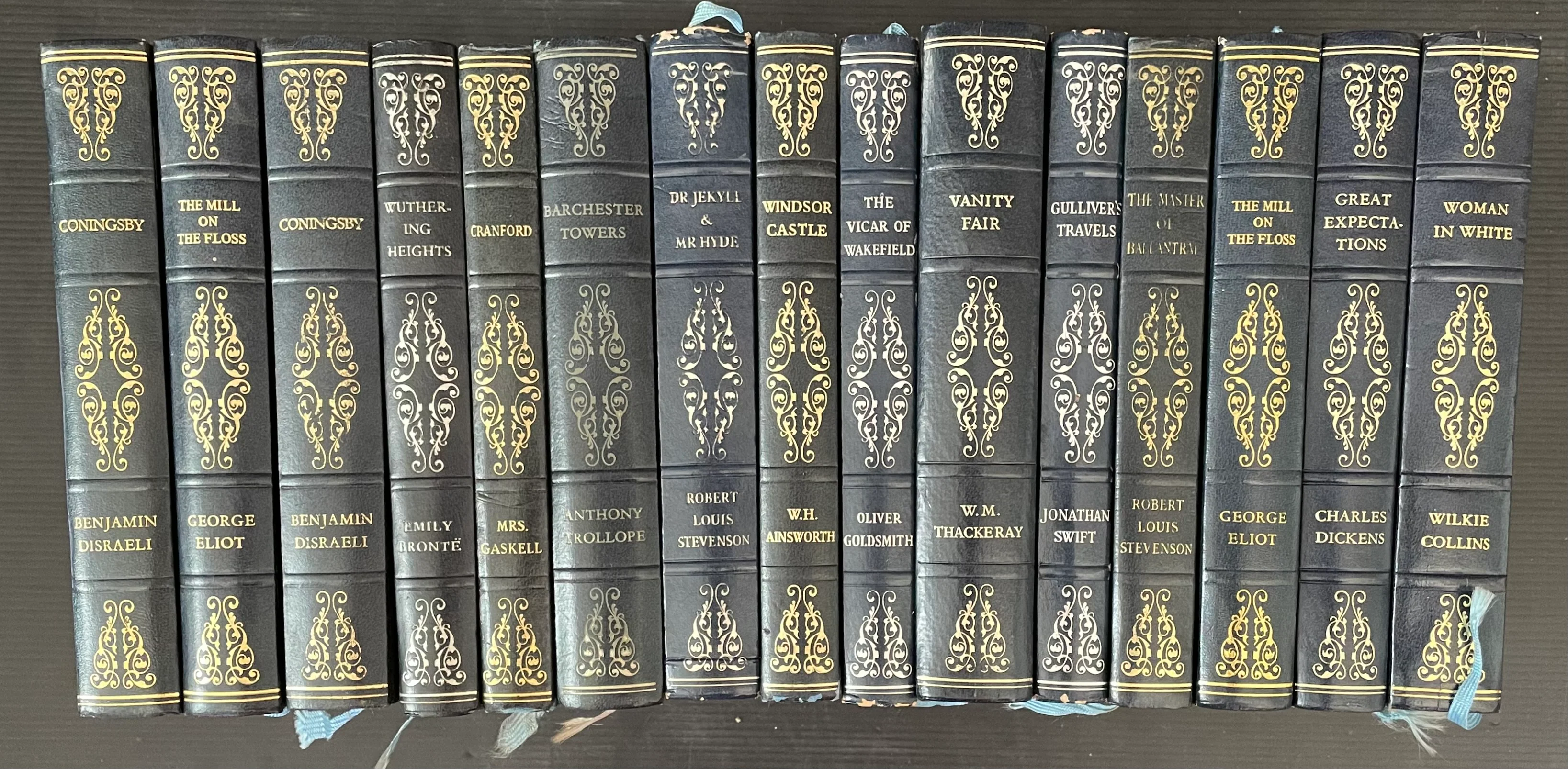
This curated collection of seventeen volumes brings together the definitive voices of nineteenth-century literature, offering a profound journey through the social, moral, and romantic landscapes of the Victorian era. From the sweeping industrial critiques of George Eliot and the gothic intensity of the Brontë sisters to the sharp political wit of Benjamin Disraeli, these works represent the pinnacle of English prose and storytelling. Readers will encounter iconic characters like Pip, Heathcliff, and Dr. Jekyll, experiencing the timeless themes of ambition, class struggle, and the duality of human nature that continue to resonate today. This set provides an exceptional opportunity to build a sophisticated home library with durable, aesthetically matched editions of the world's most enduring stories. Each book is secondhand and may show signs of wear.
-
Coningsby by Benjamin Disraeli Set against the backdrop of the political upheaval following the Reform Act of 1832, this novel follows the education and maturation of a young aristocrat seeking a meaningful path. Harry Coningsby navigates the corridors of power and the rigid social structures of his time, eventually breaking away from his grandfather's narrow interests. The narrative serves as a vehicle for Disraeli’s "Young England" philosophy, advocating for a renewed sense of social responsibility among the ruling class. It remains a sharp and insightful commentary on the intersection of personal ambition and national duty in Victorian Britain.
-
The Mill on the Floss by George Eliot This poignant narrative explores the deep emotional bond between Maggie Tulliver and her brother Tom as they grow up at Dorlcote Mill on the River Floss. Maggie’s passionate and intellectual nature constantly clashes with the narrow expectations of her provincial family and the rigid moral codes of her community. As the family's fortunes decline, the siblings find themselves divided by personal betrayals and the societal pressures that demand Maggie sacrifice her happiness. The story culminates in a dramatic confrontation with the forces of nature, serving as a powerful meditation on love, duty, and tragedy.
-
Coningsby by Benjamin Disraeli This classic of political fiction delves into the ideological shifts of mid-nineteenth-century England through the eyes of its protagonist, Harry Coningsby. As he navigates his way through Eton and Cambridge, Harry begins to question the cynical political maneuvering of the older generation and seeks a more noble purpose. The novel provides a vivid depiction of the social circles of the era while critiquing the lack of vision within the contemporary Tory and Whig parties. It stands as a masterful blend of romance and political manifesto, reflecting the author's own aspirations for a revitalized British leadership.
-
Wuthering Heights by Emily Brontë On the bleak and wind-swept Yorkshire moors, an intense and destructive passion unfolds between the foundling Heathcliff and his foster sister Catherine Earnshaw. Their bond transcends the boundaries of class and even death, sparking a cycle of vengeance that haunts the next generation of the Earnshaw and Linton families. The novel’s non-linear structure and unreliable narrators add layers of complexity to a story that explores the darker impulses of the human heart. It remains a landmark of Gothic literature, celebrated for its raw emotional power and its haunting, atmospheric depiction of obsession.
-
Cranford by Mrs. Gaskell This charming and episodic novel offers a gentle, satirical look at the lives of the elderly ladies living in the small, tradition-bound English village of Cranford. Led by the formidable yet kind-hearted Miss Matty, the community navigates the challenges of poverty, social etiquette, and the encroachment of the modern industrial world. The narrative celebrates the strength of female friendship and the resilience of a community that values "elegant economy" and mutual support above all else. Gaskell’s prose is filled with warmth and wit, providing a nostalgic yet honest portrait of a disappearing way of provincial life.
-
Barchester Towers by Anthony Trollope The quiet ecclesiastical city of Barchester is thrown into turmoil by the arrival of a new, reform-minded Bishop and his ambitious, domineering chaplain, Mr. Slope. As the local clergy divide into factions, the battle for influence and control over the church's affairs becomes a source of both high drama and biting social comedy. The novel masterfully weaves together themes of clerical politics, romantic intrigue, and the struggle for power within a rigid Victorian hierarchy. Trollope’s keen eye for character and his nuanced understanding of human vanity make this a cornerstone of nineteenth-century literature.
-
Dr. Jekyll and Mr. Hyde by Robert Louis Stevenson The respectable Dr. Henry Jekyll creates a chemical potion that allows him to transform into the monstrous and depraved Edward Hyde, effectively separating his good and evil impulses. What begins as a scientific experiment soon spirals out of control as Hyde’s influence grows stronger, threatening to consume Jekyll’s identity and reputation entirely. The story is told through the eyes of the lawyer Mr. Utterson, who uncovers the horrifying truth behind his friend's increasingly erratic and secretive behavior. This seminal work remains a profound exploration of the duality of man and the hidden darkness that lurks beneath social veneers.
-
Windsor Castle by W.H. Ainsworth Blending historical fact with romantic legend, this novel explores the turbulent reign of King Henry VIII and his obsession with Anne Boleyn against the backdrop of Windsor Castle. The narrative features the legendary figure of Herne the Hunter, a ghostly woodsman who haunts the Great Park and becomes entangled in the political and romantic intrigues of the court. As the King’s desire leads to the fall of Cardinal Wolsey and the rise of a new religious order, the castle itself serves as a silent witness to history. It is a vivid and dramatic reimagining of Tudor history, filled with atmosphere, supernatural elements, and courtly drama.
-
The Vicar of Wakefield by Oliver Goldsmith Dr. Primrose, a virtuous and somewhat naive country vicar, experiences a rapid series of misfortunes that strip him of his wealth, his home, and the security of his family. Despite being faced with bankruptcy, the abduction of his daughters, and imprisonment, he maintains his faith and his belief in the inherent goodness of humanity. The novel balances elements of sentimental comedy with a serious exploration of stoicism and the triumph of the spirit over worldly adversity. It remains one of the most popular and enduring examples of the eighteenth-century novel, noted for its moral clarity and gentle irony.
-
Vanity Fair by W.M. Thackeray The ambitious and cynical Becky Sharp uses her wit and charm to climb the social ladder of Regency England, contrasting sharply with the gentle and passive Amelia Sedley. Their interconnected lives play out against the backdrop of the Napoleonic Wars and the materialistic, status-obsessed society that Thackeray famously dubs "Vanity Fair." The novel is a panoramic social satire that critiques the hypocrisy, greed, and superficiality of the upper classes while offering a realistic look at human flaws. With its "hero without a heroine" approach, it stands as a masterpiece of Victorian realism and a scathing commentary on ambition.
-
Gulliver's Travels by Jonathan Swift Lemuel Gulliver, a ship's surgeon, embarks on a series of extraordinary voyages that lead him to remote lands inhabited by giants, tiny people, and talking horses. Each encounter serves as a brilliant and often biting satirical critique of human nature, European politics, and the perceived follies of Enlightenment-era science and philosophy. From the petty disputes of the Lilliputians to the stark rationality of the Houyhnhnms, Swift exposes the vanity and corruption inherent in human societies. The work is a cornerstone of English satire, blending imaginative adventure with a profound and often misanthropic reflection on the human condition.
-
The Master of Ballantrae by Robert Louis Stevenson Set during the Jacobite rising of 1745, this dark and tragic tale follows the lifelong feud between two brothers, James and Henry Durie, the heirs to a Scottish estate. James, the elder and more charismatic "Master," joins the rebellion and is presumed dead, allowing the more steady Henry to assume his position and marry his intended. However, James returns repeatedly to torment his brother, leading to a global pursuit that concludes in the frozen wilderness of the Adirondack Mountains. It is a masterful study of sibling rivalry, moral degradation, and the inescapable weight of family legacy and hatred.
-
The Mill on the Floss by George Eliot The turbulent relationship between Maggie Tulliver and her stern brother Tom serves as the emotional heart of this classic exploration of nineteenth-century provincial life. Maggie’s intellectual hunger and emotional depth find no outlet in the narrow, commerce-driven world of St. Ogg’s, leading her into a series of tragic compromises and social scandals. The novel vividly depicts the impact of bankruptcy on the family and the rigid gender roles that stifle Maggie's potential for growth and happiness. Eliot combines deep psychological insight with a realistic portrayal of community life, culminating in a powerful and memorable conclusion on the river.
-
Great Expectations by Charles Dickens Pip, a young orphan living with his sister and her blacksmith husband, receives an unexpected fortune from a mysterious benefactor that allows him to pursue a life as a gentleman. As he moves to London and seeks to win the heart of the cold and beautiful Estella, he becomes increasingly ashamed of his humble origins and his loyal friend Joe Gargery. The narrative follows Pip’s moral journey as he discovers the true source of his wealth and learns that status is no substitute for character or love. It is a profound coming-of-age story filled with memorable characters like Miss Havisham and the convict Magwitch.
-
Woman in White by Wilkie Collins After a chance encounter with a mysterious woman dressed entirely in white on a moonlit road, drawing master Walter Hartright becomes embroiled in a complex web of deceit. He soon finds himself protecting the beautiful Laura Fairlie from the sinister machinations of Sir Percival Glyde and the brilliant, manipulative Count Fosco. The story is told through a series of first-person narratives, creating a sense of urgency and suspense as the characters race to uncover a hidden conspiracy. This foundational work of the sensation novel genre is celebrated for its intricate plotting, psychological depth, and atmospheric tension.
-
The Mill on the Floss by George Eliot The story of the Tulliver family unfolds with tragic inevitability as the impulsive Maggie and her principled brother Tom struggle to navigate their changing fortunes. Maggie’s yearning for a wider life beyond the mill leads her into difficult moral choices and a scandalous attachment that alienates her from her beloved Tom. The novel is a masterclass in psychological realism, depicting the internal conflicts of its characters with extraordinary empathy and intellectual rigor. Set against the vividly realized backdrop of the English countryside, it remains a heartbreaking meditation on the power of the past and the bonds of family.
-
Coningsby by Benjamin Disraeli In this influential political novel, Benjamin Disraeli explores the themes of generational conflict and the need for a new social order in a rapidly changing Britain. Harry Coningsby, the protagonist, represents a new kind of leader who seeks to bridge the gap between the aristocracy and the working classes through enlightened tradition. The novel is famous for its detailed descriptions of political intrigue and its defense of the Church and the monarchy as essential stabilizers for the nation. It provides a unique window into the intellectual climate of the Victorian era and the development of modern British conservative thought.
Product Information
Product Information
Shipping & Returns
Shipping & Returns
Description
Secondhand Literary Classics Bargain Book Box
This curated collection of seventeen volumes brings together the definitive voices of nineteenth-century literature, offering a profound journey through the social, moral, and romantic landscapes of the Victorian era. From the sweeping industrial critiques of George Eliot and the gothic intensity of the Brontë sisters to the sharp political wit of Benjamin Disraeli, these works represent the pinnacle of English prose and storytelling. Readers will encounter iconic characters like Pip, Heathcliff, and Dr. Jekyll, experiencing the timeless themes of ambition, class struggle, and the duality of human nature that continue to resonate today. This set provides an exceptional opportunity to build a sophisticated home library with durable, aesthetically matched editions of the world's most enduring stories. Each book is secondhand and may show signs of wear.
-
Coningsby by Benjamin Disraeli Set against the backdrop of the political upheaval following the Reform Act of 1832, this novel follows the education and maturation of a young aristocrat seeking a meaningful path. Harry Coningsby navigates the corridors of power and the rigid social structures of his time, eventually breaking away from his grandfather's narrow interests. The narrative serves as a vehicle for Disraeli’s "Young England" philosophy, advocating for a renewed sense of social responsibility among the ruling class. It remains a sharp and insightful commentary on the intersection of personal ambition and national duty in Victorian Britain.
-
The Mill on the Floss by George Eliot This poignant narrative explores the deep emotional bond between Maggie Tulliver and her brother Tom as they grow up at Dorlcote Mill on the River Floss. Maggie’s passionate and intellectual nature constantly clashes with the narrow expectations of her provincial family and the rigid moral codes of her community. As the family's fortunes decline, the siblings find themselves divided by personal betrayals and the societal pressures that demand Maggie sacrifice her happiness. The story culminates in a dramatic confrontation with the forces of nature, serving as a powerful meditation on love, duty, and tragedy.
-
Coningsby by Benjamin Disraeli This classic of political fiction delves into the ideological shifts of mid-nineteenth-century England through the eyes of its protagonist, Harry Coningsby. As he navigates his way through Eton and Cambridge, Harry begins to question the cynical political maneuvering of the older generation and seeks a more noble purpose. The novel provides a vivid depiction of the social circles of the era while critiquing the lack of vision within the contemporary Tory and Whig parties. It stands as a masterful blend of romance and political manifesto, reflecting the author's own aspirations for a revitalized British leadership.
-
Wuthering Heights by Emily Brontë On the bleak and wind-swept Yorkshire moors, an intense and destructive passion unfolds between the foundling Heathcliff and his foster sister Catherine Earnshaw. Their bond transcends the boundaries of class and even death, sparking a cycle of vengeance that haunts the next generation of the Earnshaw and Linton families. The novel’s non-linear structure and unreliable narrators add layers of complexity to a story that explores the darker impulses of the human heart. It remains a landmark of Gothic literature, celebrated for its raw emotional power and its haunting, atmospheric depiction of obsession.
-
Cranford by Mrs. Gaskell This charming and episodic novel offers a gentle, satirical look at the lives of the elderly ladies living in the small, tradition-bound English village of Cranford. Led by the formidable yet kind-hearted Miss Matty, the community navigates the challenges of poverty, social etiquette, and the encroachment of the modern industrial world. The narrative celebrates the strength of female friendship and the resilience of a community that values "elegant economy" and mutual support above all else. Gaskell’s prose is filled with warmth and wit, providing a nostalgic yet honest portrait of a disappearing way of provincial life.
-
Barchester Towers by Anthony Trollope The quiet ecclesiastical city of Barchester is thrown into turmoil by the arrival of a new, reform-minded Bishop and his ambitious, domineering chaplain, Mr. Slope. As the local clergy divide into factions, the battle for influence and control over the church's affairs becomes a source of both high drama and biting social comedy. The novel masterfully weaves together themes of clerical politics, romantic intrigue, and the struggle for power within a rigid Victorian hierarchy. Trollope’s keen eye for character and his nuanced understanding of human vanity make this a cornerstone of nineteenth-century literature.
-
Dr. Jekyll and Mr. Hyde by Robert Louis Stevenson The respectable Dr. Henry Jekyll creates a chemical potion that allows him to transform into the monstrous and depraved Edward Hyde, effectively separating his good and evil impulses. What begins as a scientific experiment soon spirals out of control as Hyde’s influence grows stronger, threatening to consume Jekyll’s identity and reputation entirely. The story is told through the eyes of the lawyer Mr. Utterson, who uncovers the horrifying truth behind his friend's increasingly erratic and secretive behavior. This seminal work remains a profound exploration of the duality of man and the hidden darkness that lurks beneath social veneers.
-
Windsor Castle by W.H. Ainsworth Blending historical fact with romantic legend, this novel explores the turbulent reign of King Henry VIII and his obsession with Anne Boleyn against the backdrop of Windsor Castle. The narrative features the legendary figure of Herne the Hunter, a ghostly woodsman who haunts the Great Park and becomes entangled in the political and romantic intrigues of the court. As the King’s desire leads to the fall of Cardinal Wolsey and the rise of a new religious order, the castle itself serves as a silent witness to history. It is a vivid and dramatic reimagining of Tudor history, filled with atmosphere, supernatural elements, and courtly drama.
-
The Vicar of Wakefield by Oliver Goldsmith Dr. Primrose, a virtuous and somewhat naive country vicar, experiences a rapid series of misfortunes that strip him of his wealth, his home, and the security of his family. Despite being faced with bankruptcy, the abduction of his daughters, and imprisonment, he maintains his faith and his belief in the inherent goodness of humanity. The novel balances elements of sentimental comedy with a serious exploration of stoicism and the triumph of the spirit over worldly adversity. It remains one of the most popular and enduring examples of the eighteenth-century novel, noted for its moral clarity and gentle irony.
-
Vanity Fair by W.M. Thackeray The ambitious and cynical Becky Sharp uses her wit and charm to climb the social ladder of Regency England, contrasting sharply with the gentle and passive Amelia Sedley. Their interconnected lives play out against the backdrop of the Napoleonic Wars and the materialistic, status-obsessed society that Thackeray famously dubs "Vanity Fair." The novel is a panoramic social satire that critiques the hypocrisy, greed, and superficiality of the upper classes while offering a realistic look at human flaws. With its "hero without a heroine" approach, it stands as a masterpiece of Victorian realism and a scathing commentary on ambition.
-
Gulliver's Travels by Jonathan Swift Lemuel Gulliver, a ship's surgeon, embarks on a series of extraordinary voyages that lead him to remote lands inhabited by giants, tiny people, and talking horses. Each encounter serves as a brilliant and often biting satirical critique of human nature, European politics, and the perceived follies of Enlightenment-era science and philosophy. From the petty disputes of the Lilliputians to the stark rationality of the Houyhnhnms, Swift exposes the vanity and corruption inherent in human societies. The work is a cornerstone of English satire, blending imaginative adventure with a profound and often misanthropic reflection on the human condition.
-
The Master of Ballantrae by Robert Louis Stevenson Set during the Jacobite rising of 1745, this dark and tragic tale follows the lifelong feud between two brothers, James and Henry Durie, the heirs to a Scottish estate. James, the elder and more charismatic "Master," joins the rebellion and is presumed dead, allowing the more steady Henry to assume his position and marry his intended. However, James returns repeatedly to torment his brother, leading to a global pursuit that concludes in the frozen wilderness of the Adirondack Mountains. It is a masterful study of sibling rivalry, moral degradation, and the inescapable weight of family legacy and hatred.
-
The Mill on the Floss by George Eliot The turbulent relationship between Maggie Tulliver and her stern brother Tom serves as the emotional heart of this classic exploration of nineteenth-century provincial life. Maggie’s intellectual hunger and emotional depth find no outlet in the narrow, commerce-driven world of St. Ogg’s, leading her into a series of tragic compromises and social scandals. The novel vividly depicts the impact of bankruptcy on the family and the rigid gender roles that stifle Maggie's potential for growth and happiness. Eliot combines deep psychological insight with a realistic portrayal of community life, culminating in a powerful and memorable conclusion on the river.
-
Great Expectations by Charles Dickens Pip, a young orphan living with his sister and her blacksmith husband, receives an unexpected fortune from a mysterious benefactor that allows him to pursue a life as a gentleman. As he moves to London and seeks to win the heart of the cold and beautiful Estella, he becomes increasingly ashamed of his humble origins and his loyal friend Joe Gargery. The narrative follows Pip’s moral journey as he discovers the true source of his wealth and learns that status is no substitute for character or love. It is a profound coming-of-age story filled with memorable characters like Miss Havisham and the convict Magwitch.
-
Woman in White by Wilkie Collins After a chance encounter with a mysterious woman dressed entirely in white on a moonlit road, drawing master Walter Hartright becomes embroiled in a complex web of deceit. He soon finds himself protecting the beautiful Laura Fairlie from the sinister machinations of Sir Percival Glyde and the brilliant, manipulative Count Fosco. The story is told through a series of first-person narratives, creating a sense of urgency and suspense as the characters race to uncover a hidden conspiracy. This foundational work of the sensation novel genre is celebrated for its intricate plotting, psychological depth, and atmospheric tension.
-
The Mill on the Floss by George Eliot The story of the Tulliver family unfolds with tragic inevitability as the impulsive Maggie and her principled brother Tom struggle to navigate their changing fortunes. Maggie’s yearning for a wider life beyond the mill leads her into difficult moral choices and a scandalous attachment that alienates her from her beloved Tom. The novel is a masterclass in psychological realism, depicting the internal conflicts of its characters with extraordinary empathy and intellectual rigor. Set against the vividly realized backdrop of the English countryside, it remains a heartbreaking meditation on the power of the past and the bonds of family.
-
Coningsby by Benjamin Disraeli In this influential political novel, Benjamin Disraeli explores the themes of generational conflict and the need for a new social order in a rapidly changing Britain. Harry Coningsby, the protagonist, represents a new kind of leader who seeks to bridge the gap between the aristocracy and the working classes through enlightened tradition. The novel is famous for its detailed descriptions of political intrigue and its defense of the Church and the monarchy as essential stabilizers for the nation. It provides a unique window into the intellectual climate of the Victorian era and the development of modern British conservative thought.